Key takeaways
- The permanent Migration Program for 2026–27 stays at 185,000 places, about 132,000 of them skilled.
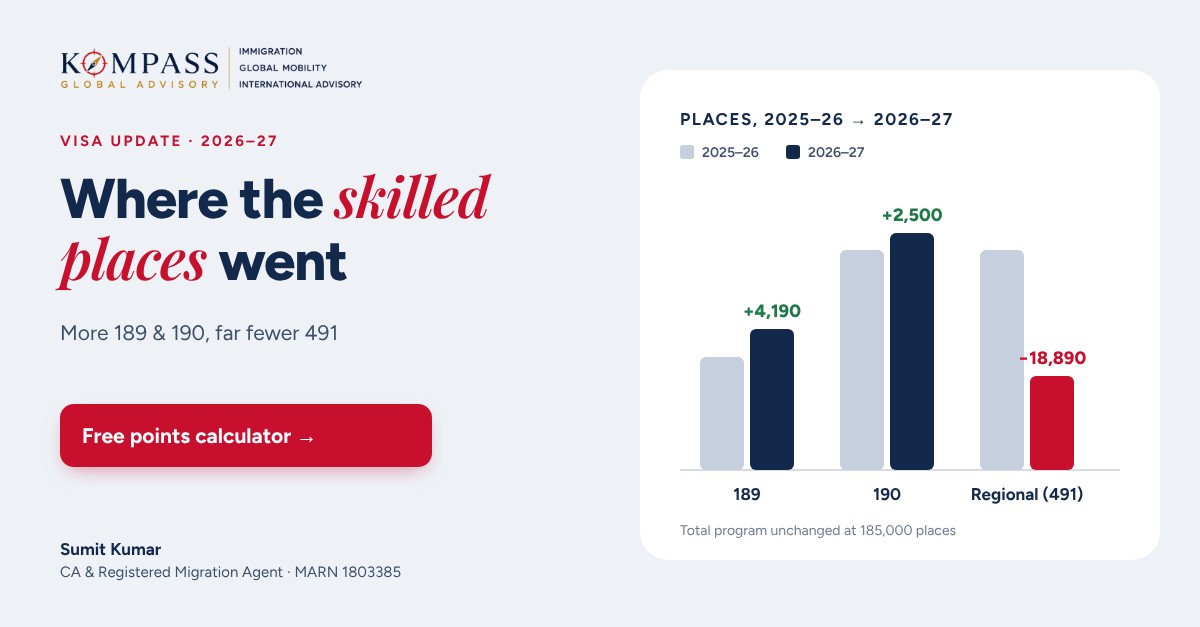
- Skilled Independent (189) places rise to 21,090 from 16,900, and State/Territory Nominated (190) places to 35,500 from 33,000.
- The Regional category, which includes the 491, falls to 14,110 from 33,000, a cut of more than half.
- Employer-sponsored places rise to 58,040, the largest single block of skilled places.
Each year the government sets how many permanent visas can be granted in the program year from 1 July to 30 June. The 2026–27 planning levels were set in May 2026. The total did not change, but the mix did, and it matters for anyone planning an Expression of Interest (EOI) this year.
The numbers
| Category | 2025–26 | 2026–27 | Change |
|---|---|---|---|
| Employer sponsored (including 186) | 44,000 | 58,040 | +14,040 |
| Skilled Independent (189) | 16,900 | 21,090 | +4,190 |
| State/Territory Nominated (190) | 33,000 | 35,500 | +2,500 |
| Regional (including 491) | 33,000 | 14,110 | −18,890 |
| Talent and Innovation | 5,300 | 3,500 | −1,800 |
| Skill stream total | 132,200 | 132,240 | +40 |
| Family stream total | 52,500 | 52,460 | −40 |
| Special Eligibility | 300 | 300 | 0 |
| Total program | 185,000 | 185,000 | 0 |
What it means for 189 applicants
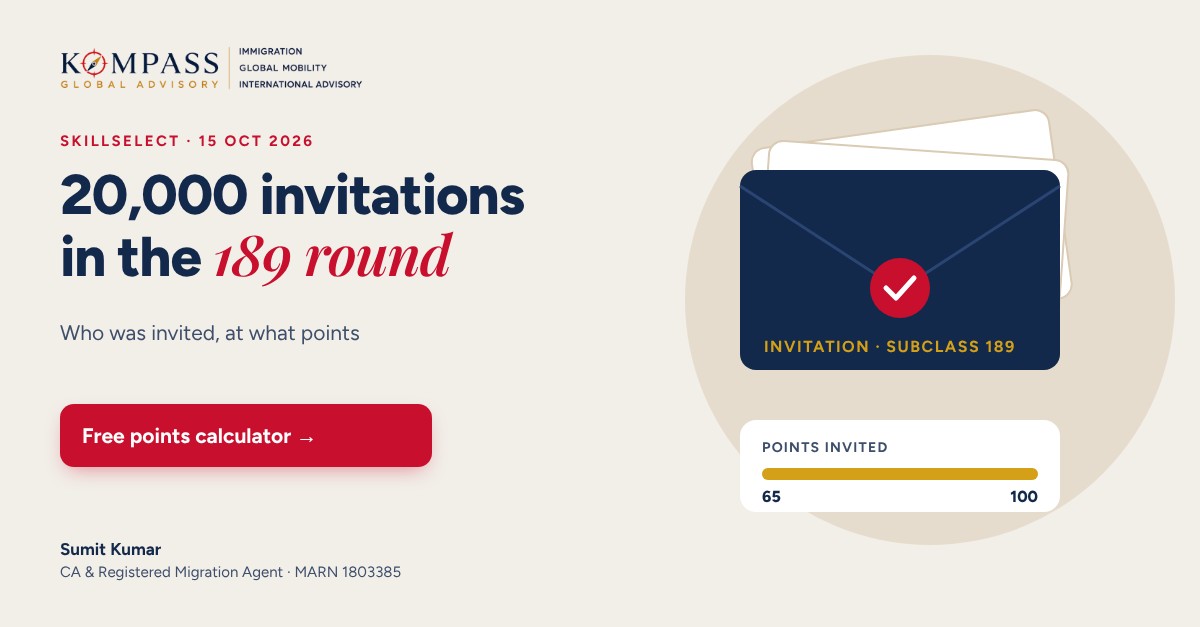
About 4,190 extra independent places is the most positive skilled signal this year. Home Affairs held the first 189 invitation round of 2026–27 on 15 October 2026. More places do not guarantee a lower cut-off: invitations still go to the highest-ranked EOIs in each occupation, so strong points scores benefit first. Check the Home Affairs invitation rounds page for published results.
What it means for 190 and 491 applicants
The 190 gains 2,500 places, while the Regional category loses 18,890. Each state and territory receives its own share of 190 and 491 places, so fewer regional places means fewer 491 nominations across the country, and competition for them is likely to be strongest for offshore candidates.
- States and territories open their 2026–27 programs on their own timetables. Some open late, some invite onshore candidates first, and some close early once they have enough applications.
- The 491 has not been abolished. Both the state or territory nominated stream and the family sponsored stream continue, with fewer places.
- Employer-sponsored visas, such as the 186, received the largest increase. If you have, or can get, an Australian employer willing to sponsor you, that route deserves a fresh look.
Why the shift
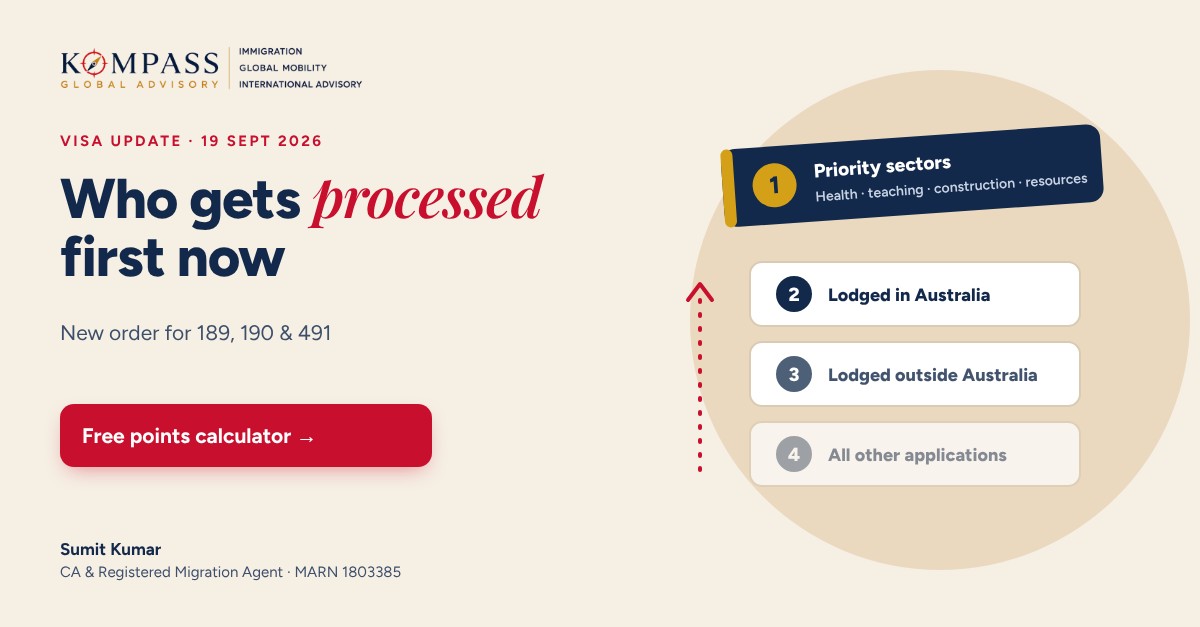
The government has tied the program to its net overseas migration target of 245,000 for this financial year and has said skilled migration should support priority sectors such as construction, healthcare and teaching. Moving places towards employer-sponsored, 189 and 190 visas, and away from the provisional regional visa, fits that direction.
What to do if you are applying from India
- 1Treat the 491 as a narrower option this year. If your plan relied on regional nomination for the extra 15 points, look for points elsewhere: English, a NAATI CCL test or partner points.
- 2Lodge your EOI for both the 189 and the 190 where you are eligible, and select the states that list your occupation.
- 3Finish your skills assessment and English test before you lodge your EOI, so you can respond quickly when a state opens or invites.
- 4Watch each state's own migration website. Criteria and occupation lists can change during the year.
See where you stand for 189, 190 and 491
Our free calculator shows your points for each visa in two minutes.
General information only, not advice for your situation. Planning levels and state criteria change; we confirm what applies to your case at your consultation.
Frequently asked questions
How many 189 visas are available in 2026–27?
Has the 491 visa been abolished?
Will more 189 places mean lower points cut-offs?
How many places does each state get?
When are 189 invitation rounds held?
Is 185,000 the same as the net overseas migration figure?
Official sources
- Department of Home Affairs — Migration Program planning levels
- Department of Home Affairs — SkillSelect invitation rounds
- Department of Home Affairs — Australian Government migration policy changes
General information only, current at the date shown. It is not immigration advice for your circumstances. Information on this site is general guidance only and not legal, migration or investment advice. Rules, fees and occupation lists change frequently — always confirm current requirements with the relevant government authority before acting.
Found this useful? Share it
Who will assist you
Sumit Kumar
Chartered Accountant & Australian Registered Migration Agent · MARN 1803385
I migrated from India to Melbourne as a skilled migrant in 2005 and became an Australian citizen in 2010, so I know first-hand what it takes to rebuild a career and a life in a new country — the paperwork and the waiting, and also the job search, the loneliness and the pressure of starting over far from home. Since 2013 I have advised individuals, families and businesses on migration and cross-border moves, combining migration casework with a Chartered Accountant's view of tax, funds and business structure.