Key takeaways
- The card is for searching for work in Germany. You do not need a job offer first.
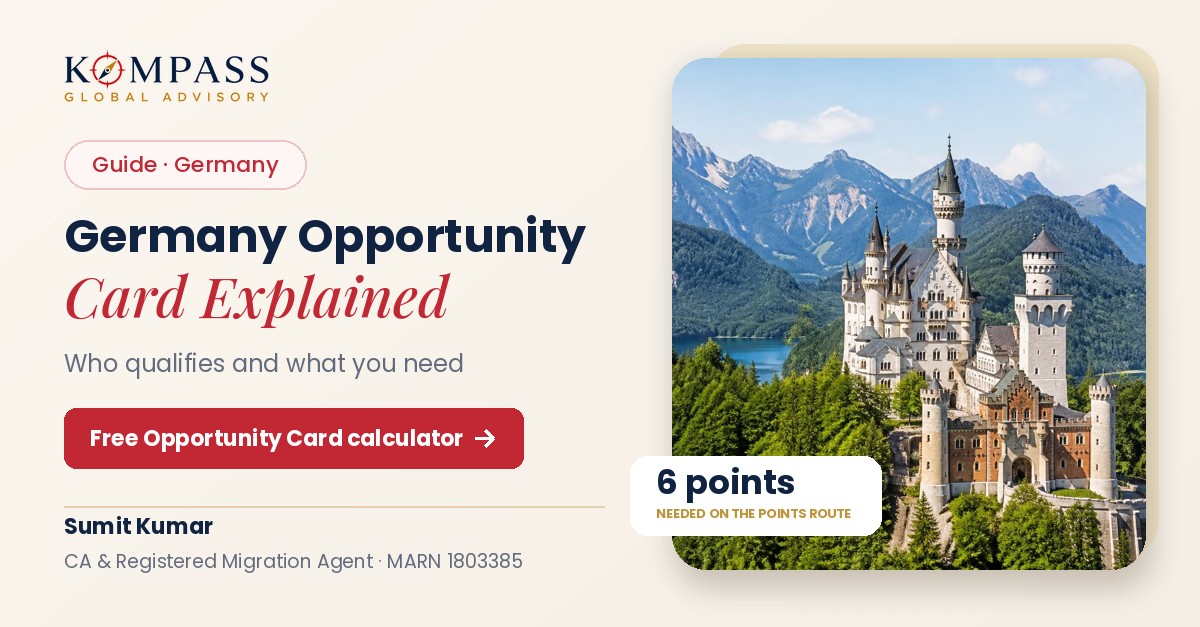
- You need a recognised qualification and, on the points route, at least 6 points.
- German at level A1 or English at level B2 is required on the points route.
- You must show funds, for example through a blocked account.
The Opportunity Card (Chancenkarte) is a job-search visa. It lets skilled people from outside the EU travel to Germany and look for work in person.
What you need
- A qualification obtained in Germany, or a foreign qualification that is fully recognised, or a state-recognised academic or vocational qualification verified through the official channels.
- At least 6 points under the points system, with proof, where that route applies.
- German at level A1 or English at level B2.
- Proof of funds, such as a blocked account of €1,091 a month (2026 figure) or a declaration of commitment.
- A valid passport and no reason for expulsion.
After you arrive
The card is for job searching. When you find a job, you switch to a residence permit for work, which you must apply for before the card expires.
Check your points
A free estimate of where you stand.
General information only, not advice for your situation. Rules, fees and thresholds change; we confirm what applies at your consultation.
Frequently asked questions
Do I need a job offer for the Opportunity Card?
How many points do I need?
What language level do I need?
How much money must I show?
Official sources
General information only, current at the date shown. It is not immigration advice for your circumstances. Information on this site is general guidance only and not legal, migration or investment advice. Rules, fees and occupation lists change frequently — always confirm current requirements with the relevant government authority before acting.
Found this useful? Share it
Who will assist you
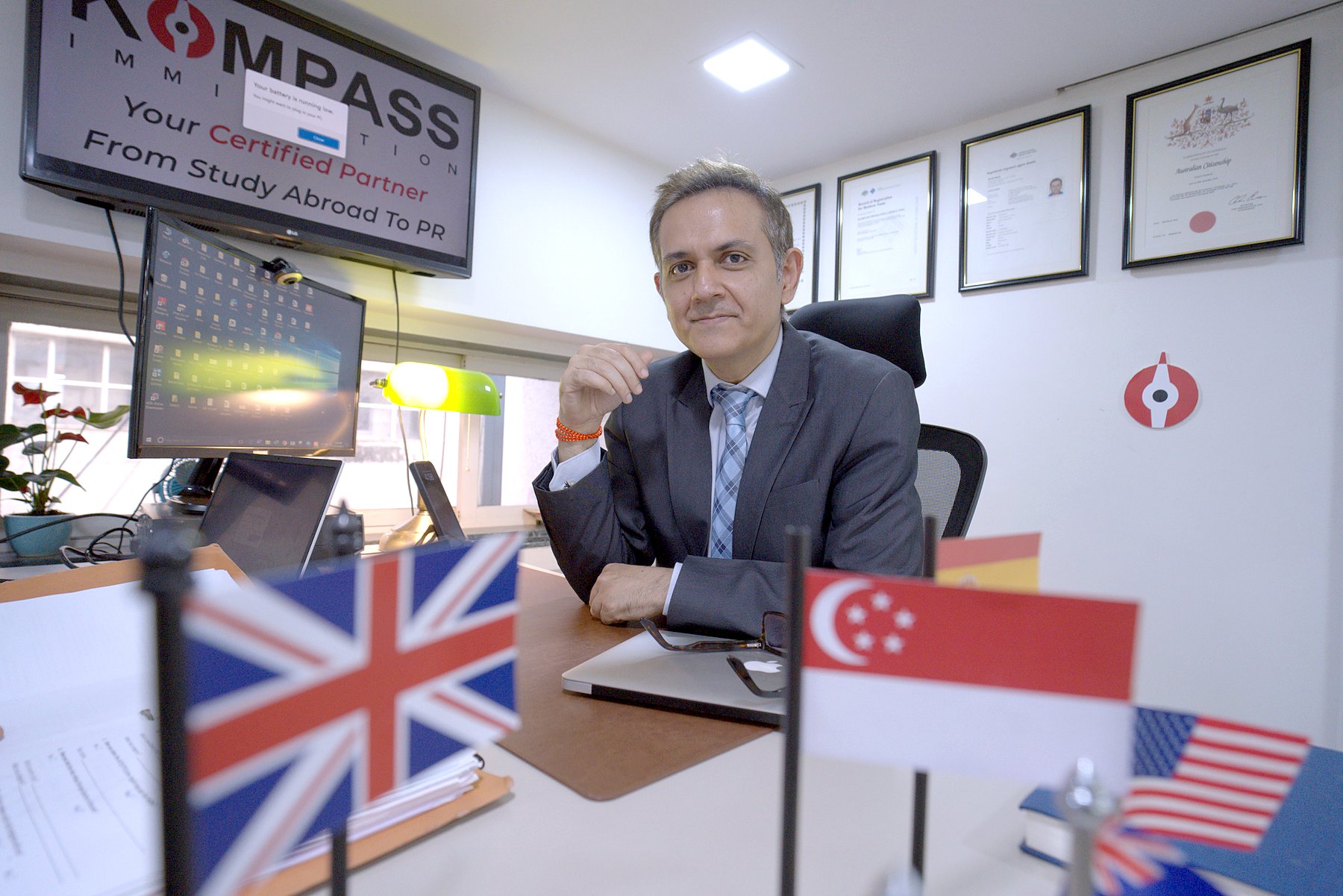
Sumit Kumar
Chartered Accountant & Australian Registered Migration Agent · MARN 1803385
I migrated from India to Melbourne as a skilled migrant in 2005 and became an Australian citizen in 2010, so I know first-hand what it takes to rebuild a career and a life in a new country — the paperwork and the waiting, and also the job search, the loneliness and the pressure of starting over far from home. Since 2013 I have advised individuals, families and businesses on migration and cross-border moves, combining migration casework with a Chartered Accountant's view of tax, funds and business structure.