Key takeaways
- On 30 October 2026 Australia’s Department of Home Affairs opened a consultation on student visa money checks and the Genuine Student requirement. No decisions have been made.
- Four ways of showing funds are being discussed. Three of them need money in an Australian bank account in your own name before you apply.
- A possible first step for students from Evidence Level 3 countries: financial evidence for every applicant, with six months of bank history.
- The amounts students must show are not being raised under the proposals. The focus is on proving the money is real, yours and available.
Planning to study in Australia? On 30 October 2026 the government asked for feedback on a big change to how students prove they can pay for their studies. It is only a proposal for now. Here is what is on the table, in plain words.
What is being proposed
- A new financial capacity framework, with funds checked at the time you lodge your visa application.
- Checks on where the money came from, who owns it, whether you can access it and whether it will last.
- A rewrite of Ministerial Direction 106, the guide used to assess the Genuine Student requirement. New-course students and returning or continuing students would be assessed differently.
- Less reliance on a standard written statement, and more weight on how credible your course and study history are.
- Future work in Australia would not count as a way to pay for tuition and living costs.
Four ideas for proving your funds
| Option | How much | How long it must sit in the account |
|---|---|---|
| 1 | 50% of tuition and living costs for the whole course | At least 1 month before applying, with a release schedule |
| 2 | 50% of tuition and living costs for the whole course | At least 3 months, no forced limits on withdrawals |
| 3 | 100% of first-year tuition and living costs | At least 3 months, release limits possible for some groups |
| 4 | Recognised education finance (approved loans, scholarships, own funds or a mix) | Limited cases where money need not be moved first |
For options 1 to 3, the money would need to be in an eligible Australian bank account in your own name before you apply. The reports we read say the amounts students must show would not go up. What changes is the proof.
A possible first step for some countries
Before any long-term change, the paper floats an interim measure for primary applicants from Evidence Level 3 countries:
- financial evidence for every applicant, whichever university or college they pick,
- about six months of bank transaction history,
- support only from you, your spouse, your parents or another approved supporter, and
- no unsecured personal loans, and no loans that have not yet been paid out. Secured, government-backed or recognised education loans would be preferred.
The reports do not name the countries. Check where India sits on the Home Affairs Evidence Level list before you plan.
Why this is happening
At a conference in Sydney, the minister said refusals are now affecting key markets and putting off genuine students. Universities Australia said offshore university student visa grants fell by more than 40% from a year earlier. The government says it wants clearer rules, even if that means higher standards and fewer applicants. It also told decision-makers to prioritise complete, simple offshore applications, with a target of five days.
What to do now
- Keep your family’s savings in clear, traceable accounts. Avoid large cash deposits you cannot explain.
- Collect bank statements and keep a record of where each deposit came from.
- If you plan to use an education loan, ask the lender early whether it is secured and when it pays out.
- Do not rush to move money because of a proposal. Wait for the final rules, and check the current requirements on the Home Affairs website.
- Want your say? Send a submission before 23 November 2026.
Work out your real study cost
Tuition, living costs and funds, in one free calculator.
The Home Affairs page is our main source. The details of the four options come from news reports of the consultation paper (including The PIE News), which agree on the main points. Read the paper itself for the exact wording.
General information only, not advice for your situation. Rules, fees and deadlines change; we confirm what applies at your consultation.
Frequently asked questions
Has Australia changed the student visa funds rules?
When does the consultation close?
Will students have to show more money?
Do the proposals apply to Indian students?
Can I use an education loan?
What is the Genuine Student requirement?
Official sources
- Department of Home Affairs — Consultation on proposed reforms to the Genuine Student requirement and financial capacity framework
- The PIE News — Australia consults on student visa overhaul as refusals hit key markets, 30 October 2026 (secondary source)
General information only, current at the date shown. It is not immigration advice for your circumstances. Information on this site is general guidance only and not legal, migration or investment advice. Rules, fees and occupation lists change frequently — always confirm current requirements with the relevant government authority before acting.
Found this useful? Share it
Who will assist you
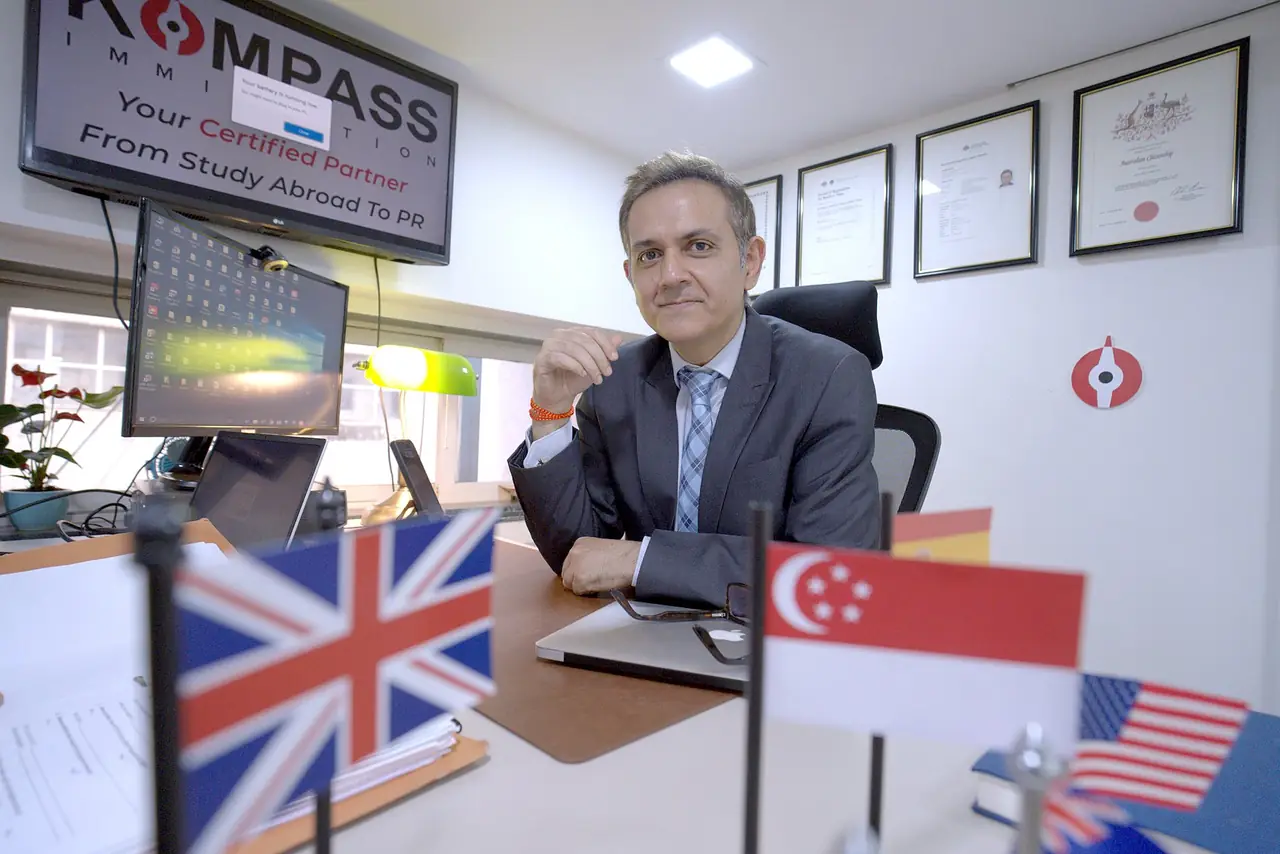
Sumit Kumar
Chartered Accountant & Australian Registered Migration Agent · MARN 1803385
I migrated from India to Melbourne as a skilled migrant in 2005 and became an Australian citizen in 2010, so I know first-hand what it takes to rebuild a career and a life in a new country — the paperwork and the waiting, and also the job search, the loneliness and the pressure of starting over far from home. Since 2013 I have advised individuals, families and businesses on migration and cross-border moves, combining migration casework with a Chartered Accountant's view of tax, funds and business structure.