Key takeaways
- Canada plans to welcome 380,000 new permanent residents a year in 2027, 2028 and 2029. That is the same number as before.
- New temporary arrivals also stay flat at 370,000 a year. For 2027 that is 220,000 workers and 150,000 students.
- Up to 200,000 people already in Canada on temporary permits could move to PR by the end of 2027. Half would come through Express Entry or provincial nominee programs.
- These are targets, not guarantees. The full category-by-category numbers are still to come.
On Thursday 5 November 2026, Canada’s federal budget set out how many people the country plans to welcome over the next three years. The headline: no big change. Here is what it means in plain words.
The numbers at a glance
| Group | Plan each year | Notes |
|---|---|---|
| New permanent residents | 380,000 | Same for 2027, 2028 and 2029. About 64% is meant for economic immigration. |
| New temporary arrivals | 370,000 | 2027 split: 220,000 workers and 150,000 students. |
| Temporary residents moving to PR | Up to 200,000 by end of 2027 | About 100,000 through Express Entry or provincial nominee programs. |
What stays the same
- PR admissions stay at 380,000 a year, matching the earlier 2026–2028 plan. It simply adds 2029.
- Temporary arrivals stay at 370,000 a year. This is a target for new arrivals, not a cap on everyone already in Canada.
- Francophone admissions outside Quebec are planned to rise as a share of PR: 9.5% in 2027, 10.5% in 2028 and 12% in 2029.
What is new: a route for people already in Canada
The budget says up to 200,000 temporary residents already in Canada could become permanent residents by the end of 2027. Half of them would be considered through Express Entry or the Provincial Nominee Program, with more flexibility for provinces and territories. The budget puts $302.3 million behind this effort.
What we do not know yet: who the other 100,000 will be, how they will be chosen, and whether they count inside the 380,000 target. Law-firm commentary says these points are still unclear, so treat any early claims with care.
Why students should read this
- Fewer students are arriving. The budget says new international student arrivals from January to August 2026 were 71% lower than the same period in 2024. We saw this figure in law-firm commentary on the budget, not on an official page.
- The 2027 plan keeps 150,000 new student arrivals. Study permit numbers stay tight, so plan your course, college and funds carefully.
- The path for people already in Canada is good news if you are studying or working there now, but the rules are not out yet.
Work permits and the Temporary Foreign Worker Program
The budget also sets aside $151.5 million over five years for reforms to the Temporary Foreign Worker Program. It gives no specific changes yet, only a goal to better match regional job needs.
What to do now
- If you are in India and planning Canada: PR numbers are steady, so a strong Express Entry profile still matters. Check your CRS score.
- If you are in Canada on a study or work permit: keep your status valid and your documents ready. Watch for the rules on the new path to PR.
- Do not pay anyone who promises a place in the 200,000. Details are not published yet.
- Check IRCC and the Annual Report to Parliament when it is tabled, for the full numbers.
Check your Canada PR chances
Work out your CRS score in a few minutes with our free calculator.
The PR and 2027 temporary-arrival figures match on IRCC’s levels page, Global News and law-firm commentary. The 71% student fall and the 200,000 path details come from the budget as described in secondary reports. We could not open the budget text itself, so confirm those two points on the official budget page.
General information only, not advice for your situation. Rules, fees and deadlines change; we confirm what applies at your consultation.
Frequently asked questions
How many permanent residents will Canada admit in 2027?
How many temporary residents will Canada welcome?
What is the 200,000 pathway?
Is this the final immigration levels plan?
Does this make it easier for Indian students to get a Canadian study permit?
Do I need to do anything today?
Official sources
- IRCC — Canada’s immigration levels (2027–2029 plan)
- Budget 2026, Chapter 3 — Government of Canada (not opened by us)
- Global News — Canada’s new immigration level plan revealed in Budget 2026, 5 November 2026 (secondary source)
General information only, current at the date shown. It is not immigration advice for your circumstances. Information on this site is general guidance only and not legal, migration or investment advice. Rules, fees and occupation lists change frequently — always confirm current requirements with the relevant government authority before acting.
Found this useful? Share it
Who will assist you
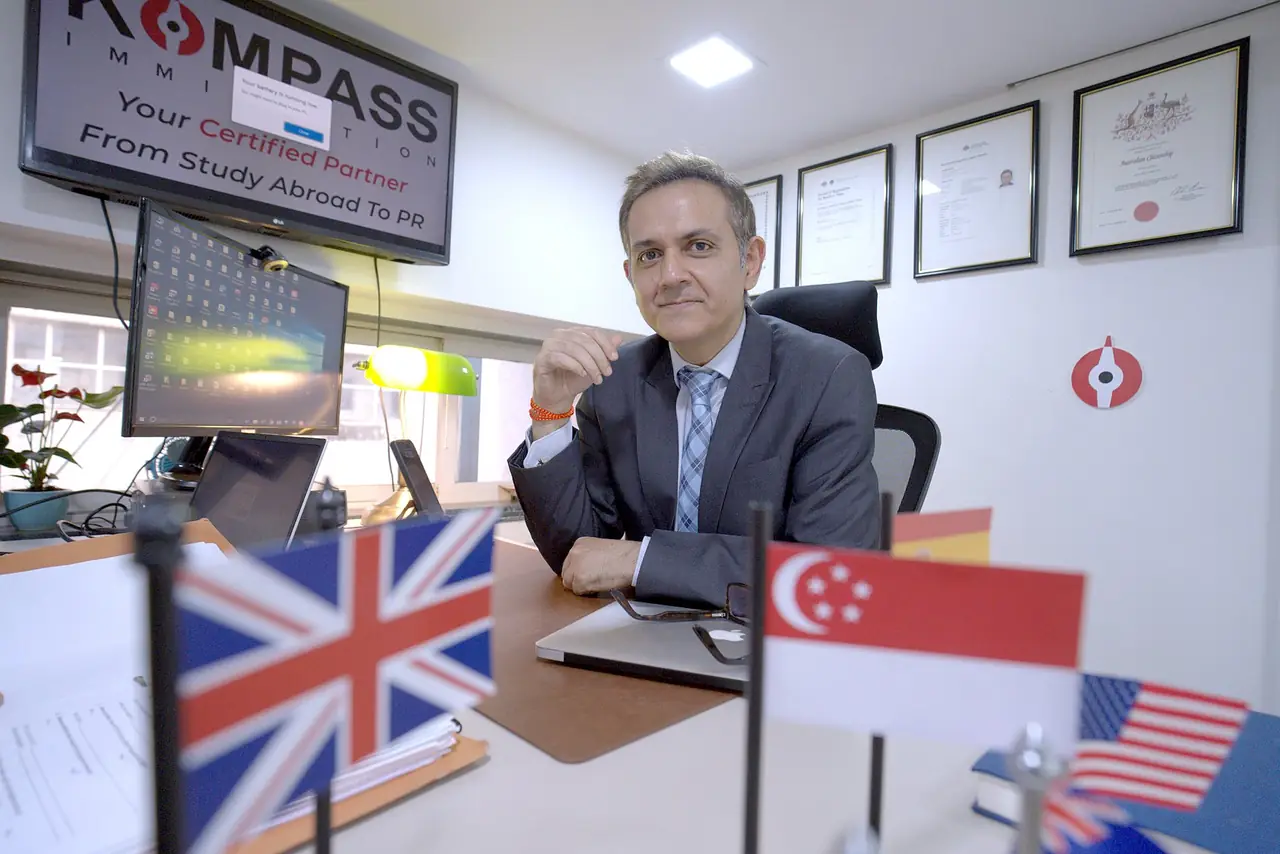
Sumit Kumar
Chartered Accountant & Australian Registered Migration Agent · MARN 1803385
I migrated from India to Melbourne as a skilled migrant in 2005 and became an Australian citizen in 2010, so I know first-hand what it takes to rebuild a career and a life in a new country — the paperwork and the waiting, and also the job search, the loneliness and the pressure of starting over far from home. Since 2013 I have advised individuals, families and businesses on migration and cross-border moves, combining migration casework with a Chartered Accountant's view of tax, funds and business structure.